Sunday, September 26, 2010

Once Upon a Picture


Title: Once Upon a Picture
Author: Sally Swain
Illustrator: Sally Swain
Picture book for ages (approximately) 7 and up
Rating: 4 of 5 stars

Summary:
This picture book teaches art appreciation by featuring four different famous works of art and helps them come alive.

Opinion:
I originally grabbed this book because of the cover art. It was beautiful, I had no idea what the book was about, but I checked it out regardless. While reading it I found it was about art appreciation though those exact words are never used. Swain takes four famous works and features them in the top left corner of a page. She then poses a question about it. For example, her first feature was the painting The Umbrellas by Pierre-Augueste Renoir. In it there are many people with umbrellas and in the bottom right there is a little girl holding a hoop. Swain then poses the question “What does she want to do?” She then brings the painting to life throughout the next seven pages, mimicking Renoir’s artistic style, showing the little girl playing first with her hoop and then in the mud. She repeats this format with three other paintings showing children how to think critically about art.
The illustrations are amazing. Each famous painting has corresponding art done by her for several pages telling her thoughts about each painting. They are so much fun to look at you could spend a long time just looking at the art in this book.
I would definitely use this in my classroom both on my library shelf as well as in reading groups or as a read aloud book. An illustrator study on Swain might be good too. It is also a nice book for those students, or adults in my case, that have never been to an art museum or display of any kind. You get to see famous works come to life and it brings a whole other aspect to art.


People


Title: People
Author: Peter Spier
Illustrator: Peter Spier
Picture book for ages (approximately) 5 and up
Rating: 1 of 5 stars

Summary:
This is a non-fiction picture book about the people of the world. It gives examples of how all people are different either because of what they look like, where they live, what they eat, or who they worship.

Opinion:
This is probably one of the worst picture books I have ever read. First of all I like picture books to be timeless. I like to be able to read a book 30 years after it was published and be able to still connect with it. This book begins on the first page with outdated information (the number of people on earth now, a.k.a. 1980, and the number of people who will be on Earth in year 2000) which causes me to lose interest right away. If I were the author I would have written that page differently. You can stress there are lots of people without giving actual numbers and years. What does the number four billion mean to a child anyway, or to an adult for that matter. It is an unfathomable number, you can’t imagine it or relate to it, it’s too big. Next, it shows people from non-American cultures all in traditional dress and housing, focusing on the stereotypical look than the actual look. For instance, how many Native American people still live in a teepee? I would have to say exactly none. So why do they show a teepee as a place where people live? How many people actually still hunt for their food with spears and bow and arrow? Very few, but every non-white culture was shown hunting that way and eating straight from the animals carcass while the French and other European cultures were shown sitting at tables with utensils. Another issue was the jobs page. All the European cultures were shown doing glamorized jobs such as astronauts, entertainers, and soldiers while people of non-European decent were shown pulling (white) tourists in carriages or working in fields. The color of the poor people was distinctly darker than the color of the wealthy people and on the language page he has several American Sign Language letters shown incorrectly. Finally on the “heroes” page out of over 30 people Spier chose to recognize only two weren’t white. Instead he chose to feature European conquerors that took land from those less fortunate than themselves and chose to say they discovered it. The only good part about this book was the final two pages, which I did like. The illustrations posed two worlds, one in which all people, buildings, cars, and lifestyles were the same. The picture was dull and lifeless. The second showed a street with many different people, buildings, cars, colors, occupations, etc. This picture was full of life and excitement.
I think the concept Spier was going for is good, teaching children to embrace differences, but he went about it in a totally convoluted way. I would never use this book in my classroom. It reinforces stereotypes that are hard enough to get out of kids’ heads. Whether intentional or unintentional it promotes a certain race and lifestyle, namely, White upper-class American. I would not consider this book to be quality literature.

Tuesday, September 14, 2010

Focus Question: So what are all these awards?


So as I was reading about my author all these awards kept getting mentioned. It all sounds great, but I had no idea what the awards were for or what they meant so I did a little research.
Picture from google.com
The Ezra Jack Keats New Writer Award- This is an award which is given annually to any author or illustrator new to the field of writing picture books. By new, they mean no more than three books can be published under your name and my picture books they mean for ages nine and under. Upon winning this award you receive a medal and $1,000 (Ezra Jack Keats Foundation, 2010).
Picture from alastore.ala.org
The Coretta Scott King Award- These awards are given annually by the American Library Association to African-American authors and illustrators who create exceptional and inspirational books for children and young adults. (The Coretta Scott King Award, 2009).
Picture from alastore.ala.org
The Coretta Scott King Honor Book designation- Is basically the same as the award, the same rules apply, but there can be multiple Honor Books a year whereas there is only one Author Award and one Illustrator Award given (The Coretta Scott King Award, 2009).
The MacArthur Foundation Grant- This, I found out, is actually part of the MacArthur Fellows program. They give a $500,000 grant paid to the winner over a five year term. There are no conditions to receiving this money except that the person awarded it must continue to pursue his or her creative passion in an attempt to try to impact future generations. Every year new, anonymous nominators are chosen from various areas of expertise to pick nominees from their field. There are no restrictions for who can be a fellow except that they are residents or citizens of the United States (MacArthur Fellows Program, 2010).
Picture from google.com
Michael Printz Award- This is another American Library Association award. It is named after a Kansas school librarian and is given to outstanding authors for young adults (ALA | Michael L. Printz Award, 2010).

Works Cited

ALA | Michael L. Printz Award. (2010). Retrieved Sept. 13, 2010, from The American Library Association: http://www.ala.org/Template.cfm?Section=bookmediaawards&template=/ContentManagement/ContentDisplay.cfm&ContentID=101516
Ezra Jack Keats Foundation. (2010). Book Awards. Retrieved Sept. 13, 2010, from Ezra Jack Keats: http://www.ezra-jack-keats.org/index.php?option=com_content&view=article&id=67&Itemid=85
MacArthur Fellows Program. (2010). Retrieved Sept. 13, 2010, from The John D. and Catherine T. MacArthur Foundation: http://www.macfound.org/site/c.lkLXJ8MQKrH/b.4536879/k.9B87/About_the_Program.htm
The Coretta Scott King Award. (2009). Retrieved Sept. 13, 2010, from aalbc.com: http://aalbc.com/books/related.htm#Coretta%20Scott%20King

Monday, September 13, 2010

Author Study: Angela Johnson


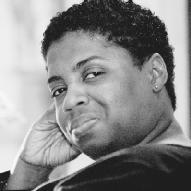
Angela Johnson is a children’s author as well as a young adult author and her books discuss everything from moving away from home to dealing with schizophrenia and being a teen parent. She was born in Tuskegee, Alabama on June 18, 1961 (Johnson, Angela, 2010). In 1989 she published her first picture book and in 1991 she won her first award in the form of the Ezra Jack Keats New Writer Award.  She was given the Coretta Scott King Honor Book designation for When I Am Old with You and The Other Side: Shorter Poems. She was awarded the Coretta Scott King Author Award for Toning the Sweep, The First Part Last, and Heaven. She was given the MacArthur Foundation grant in 2003 and she was given the Michael J. Printz award for The First Part Last (Gale Literary Database, 2008).
After reading several books by Johnson, though unfortunately I couldn’t get my hands on any of her award winning titles, I believe her to be a very good author. She isn’t afraid to write about difficult topics which I find inspiring since sometimes the things that are difficult to bring up are the things that need to be brought up for some kids. They shed light on situations we may not have experienced, or experienced from a different viewpoint, and in my opinion having your eyes opened is almost never a bad thing. Some of her books could be considered controversial, but as long as they aren’t on any school banned book list I don’t think I would keep them away from my students. I may not outright suggest them to a student or read them aloud to the class without parent permission, but I definitely wouldn’t keep them from my students. The thing that surprised me most about Johnson is that she is lacking a college degree. I guess it just shocked me since these days you need a college education to work pretty much anywhere so the fact that she is a decorated author and never finished her schooling is a little unexpected. I guess it goes to show that if you are devoted enough you really can do anything.
As I stated earlier, overall I believe Johnson to be a very good author and I look forward to reading more by her in the very near future.

Works Cited
Gale Literary Database. (2008, July 31). Angela Johnson .
Johnson, Angela. (2010). Retrieved September 10, 2010, from Encyclopedia of World Biography: http://www.notablebiographies.com/news/Ge-La/Johnson-Angela.html

Sunday, September 12, 2010

Author Study: Angela Johnson


Title: The Leaving Morning
Author: Angela Johnson
Illustrator: David Soman
Picture book for ages (approximately) 5 and up
Rating: 3.5 of 5 stars

Summary:
This book is about a brother and sister who are moving. It takes you through their day as they wake up, pack, say goodbye to friends and family, and finally, leave.

Opinion:
This is a pretty good book. As it goes through all the aspects of moving you see and feel what a child feels during something like that. It doesn’t focus at all on where they are moving probably because as a child that’s not something that gets a lot of thought until you get there. Kids don’t often think ahead, they think in the present and what’s happening to these two children presently is moving day. They aren’t thinking beyond that. Although this is a good book it doesn’t really evoke strong emotions with me. I didn’t get a deep connection with the text and there really wasn’t any insightful thinking going on as I read it. For those reasons this is a decent book, but not a great one.
In slight contrast, the illustrations in this book are really quite wonderful. They seem to be watercolor which I think always gives illustrations a dreamy appearance. They follow the thoughts of the kids as they consider their situation. I would have to say the best is the page where they are saying goodbye to their friends. The little boys on the monkey bars are so emotive. You can almost put yourself in their shoes and feel what they are feeling as they say goodbye to each other.
Overall, I would use this book in my classroom. It is a nice story that would fit well into a genre study or a family unit. I might also bring it out if I had a student that was going to move or had moved in recently.  It might help them to know that this happens to lots of people and its normal to be a little sad and a little scared.

Author Study: Angela Johnson


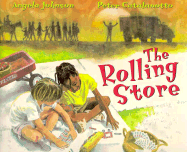
Title: The Rolling Store
Author: Angela Johnson
Illustrator: Peter Catalanotto
Picture book for ages (approximately) 5 and up
Rating: 4 of 5 stars

Summary:
This book is about a little girl and her grandfather. As he tells her stories about The Rolling Store from back when he was a little boy and very few people had cars, she creates her own little Rolling Store on a wagon.

Opinion:
This is an intriguing book. Things like this interest me. I enjoy hearing stories from a time before cars when everything moved a little slower and was a little sweeter. Of course this isn’t always true, but that’s how I imagine it. I love hearing stories from generations before, things were just so different, and Johnson turns just another story into a window to the past. It is a story about something I have never and probably will never experience, though at one point in time it was a common occurrence.  Additionally this book has a cadence similar to a grandfather speaking, whether this is purposeful or accidental is a mystery except to Johnson but either way it gives the book a life. With this book it’s almost as if instead of you reading it, it reads to you. This is a very good book and it does get me to think about what life was like back then, before big box stores and interstates, and as I’ve said before I consider books that bring me in and make me think to be good books, the difference between a good and great book to me though is critical thinking versus just thinking. This book makes me think, but not really critically. There is no point in the text were I sit and say that’s wrong, or why would that be? I do think, but it’s mainly daydreaming and fanaticizing about a time I will never experience.
The illustrations in this book are lovely. They are watercolor which adds to the dream-like atmosphere the words create. The best part is that only half the illustration takes you back in time, the other stays present and shows you what the little girl is doing for her grandfather. Without the illustrations the reader would never know this side of the story, as it is never actually mentioned. As you see what The Rolling Store from the past has to offer its long gone customers, you also see the little girl creating things to offer her future customers. It just adds a whole other element to the story.
I would most definitely use this book in my classroom. It is a lovely story that would fit well into a genre study, an author/illustrator study, or a family unit.